
Curriculum Overview Template
Curriculum Overview
A comprehensive, grade-by-grade look at what our students learn — designed to inspire curiosity, build skills, and prepare every child for a bright future.
Our Educational Philosophy
Our curriculum is built on the belief that every student deserves a rich, engaging academic experience. We align our programs with state and national standards while fostering critical thinking, creativity, and a love of learning at every grade level.
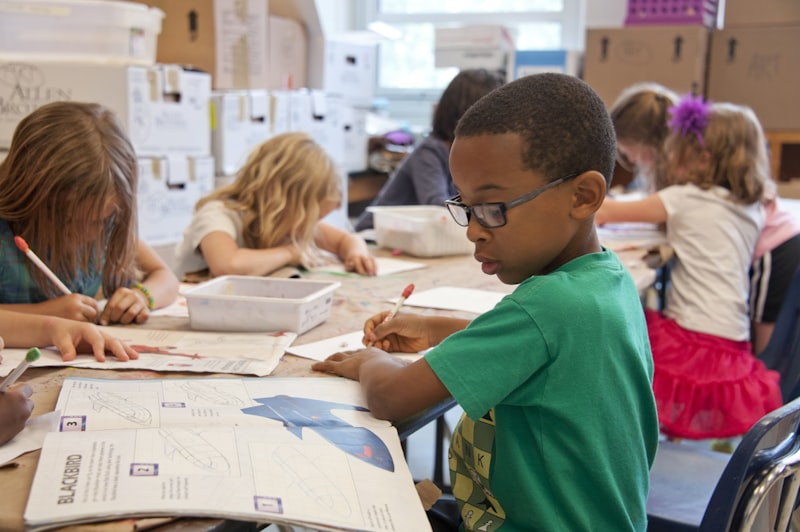
🎒 Kindergarten – Grade 2: Early Foundations
Literacy & Language Arts: Phonics, phonemic awareness, sight words, early reading fluency, writing letters and simple sentences, and listening comprehension.
Mathematics: Number sense (counting to 120+), addition and subtraction, shapes, patterns, basic measurement, and introduction to place value.
Science: Exploring the natural world — plants, animals, seasons, weather, and simple observations using their five senses.
Social Studies: Family, community helpers, maps and geography basics, and important historical figures and holidays.
Arts & Physical Education: Creative expression through drawing, music, and movement; gross motor development through structured play and PE.

📖 Grades 3 – 5: Building Core Skills
Literacy & Language Arts: Reading comprehension strategies, literary analysis, paragraph and essay writing, grammar, spelling, and vocabulary expansion. Students begin reading chapter books and non-fiction texts.
Mathematics: Multiplication and division, fractions, decimals, geometry (area and perimeter), multi-digit arithmetic, and introduction to data and graphing.
Science: Life science (ecosystems, food webs), Earth science (rocks, erosion, solar system), and physical science (forces, motion, electricity). Scientific method and lab work introduced.
Social Studies: State and U.S. history, geography, economics basics, civics, and global cultures.
Electives & Enrichment: Art, music, library research skills, Spanish/world language introduction, and technology fundamentals.
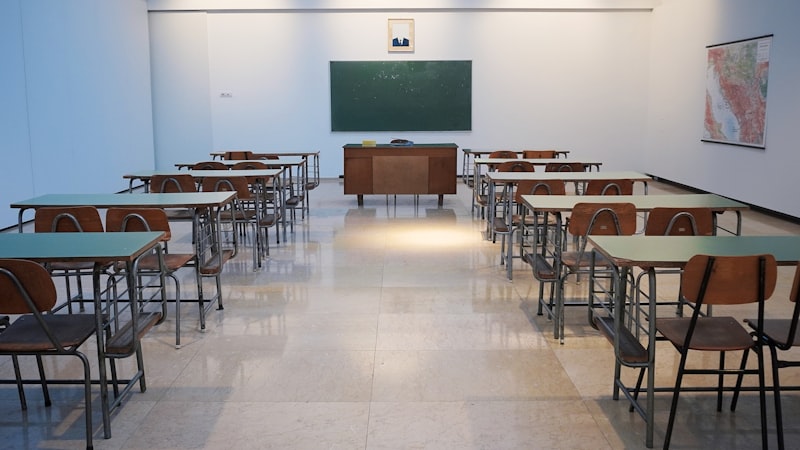
🔬 Grades 6 – 8: Middle School Exploration
English Language Arts: Literary analysis of novels, poetry, and drama; argumentative and narrative writing; research papers; grammar mastery and public speaking.
Mathematics: Pre-Algebra and Algebra I, ratios and proportional relationships, statistics and probability, geometry (Pythagorean theorem, transformations), and introduction to functions.
Science: Life Science (cells, genetics, human body), Earth Science (plate tectonics, climate), and Physical Science (chemistry basics, waves, and energy). Regular lab investigations.
Social Studies: World history and geography, ancient civilizations through the modern era, economics, and civics/government.
Electives: Band, choir, visual arts, drama, STEM club, coding/computer science, and physical education/health.
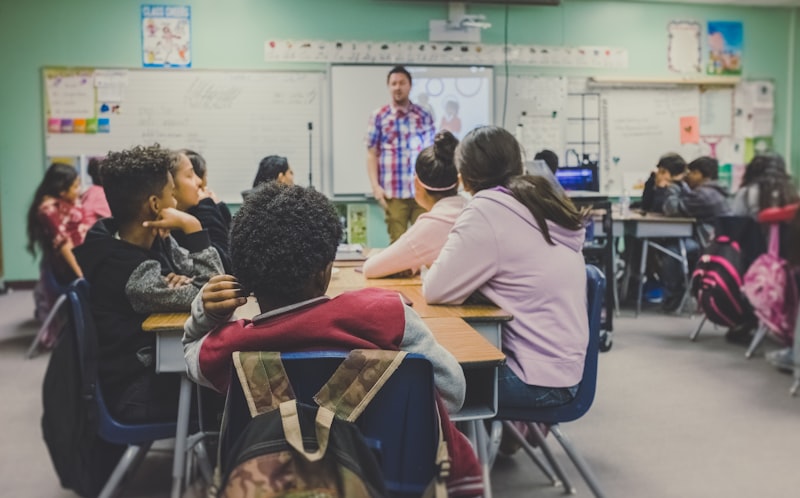
🎓 Grades 9 – 12: High School Pathways
English Language Arts: British & American literature, advanced composition, AP English Language & Literature, rhetoric, and senior capstone writing projects.
Mathematics: Algebra II, Geometry, Pre-Calculus, Statistics, AP Calculus AB/BC, and dual-enrollment college math options.
Science: Biology, Chemistry, Physics, Environmental Science, AP Sciences (Biology, Chemistry, Physics, Environmental). Hands-on lab work every unit.
Social Studies: U.S. History, World History, Government & Economics, AP courses, and electives including Psychology and Sociology.
Electives & CTE Pathways: Computer Science, Engineering (Project Lead the Way), Graphic Design, Culinary Arts, Business, Healthcare Professions, Performing Arts, and Foreign Languages (Spanish, French, Mandarin).
College & Career Readiness: Dual enrollment, AP program, college counseling, SAT/ACT prep, and internship opportunities.

💻 Special Programs & Support Services
Special Education & Inclusion: Individualized Education Programs (IEPs), co-teaching models, resource rooms, speech-language pathology, and occupational therapy services for students with diverse learning needs.
Gifted & Talented (G&T): Enrichment clusters, independent study projects, competitions (Math Olympiad, Science Fair), and accelerated course tracks.
English Language Learners (ELL): Sheltered instruction, bilingual support, ESL pullout and push-in services, and family liaison programs.
Social-Emotional Learning (SEL): School-wide SEL curriculum, counseling services, mindfulness programs, and peer mentoring initiatives to build resilience and healthy relationships.
After-School & Extended Learning: Tutoring, homework help, enrichment clubs (robotics, drama, debate), and summer learning programs.
All core subject areas are aligned to state academic standards and the Common Core State Standards (CCSS) for English Language Arts and Mathematics. Our science curriculum follows the Next Generation Science Standards (NGSS), and social studies aligns with C3 Framework guidelines. Teachers receive ongoing professional development to ensure consistent, high-quality instruction across all grade levels.
Students are assessed through a combination of formative assessments (daily work, quizzes, exit tickets), summative assessments (unit tests, projects), and standardized assessments (state testing, NWEA MAP). Progress is communicated via report cards, parent-teacher conferences, and our online parent portal where families can view grades and attendance in real time.
We provide a multi-tiered system of supports (MTSS) including in-class differentiated instruction, small-group intervention, after-school tutoring, reading specialists, math coaches, and school counselors. Students identified for special education services receive individualized plans (IEPs) with accommodations and modifications tailored to their needs.
Yes! Students demonstrating readiness may access accelerated math pathways as early as 5th grade, Gifted & Talented enrichment programming, and — in high school — AP courses, dual enrollment with local colleges, and early graduation options. Our counseling team works with families to identify the best academic pathway for each student.
Families are our partners in learning. We encourage reading together nightly, discussing classroom topics at dinner, using our recommended take-home resources, and attending our Family Learning Nights. Teachers also provide grade-level curriculum guides and suggested at-home activities at the start of each school year. Contact your child's teacher any time to learn more about what's being covered in class.
Questions About Our Curriculum?
We welcome families to reach out to their child's teacher, grade-level team leader, or our curriculum coordinator. Together, we'll make sure every student thrives.